



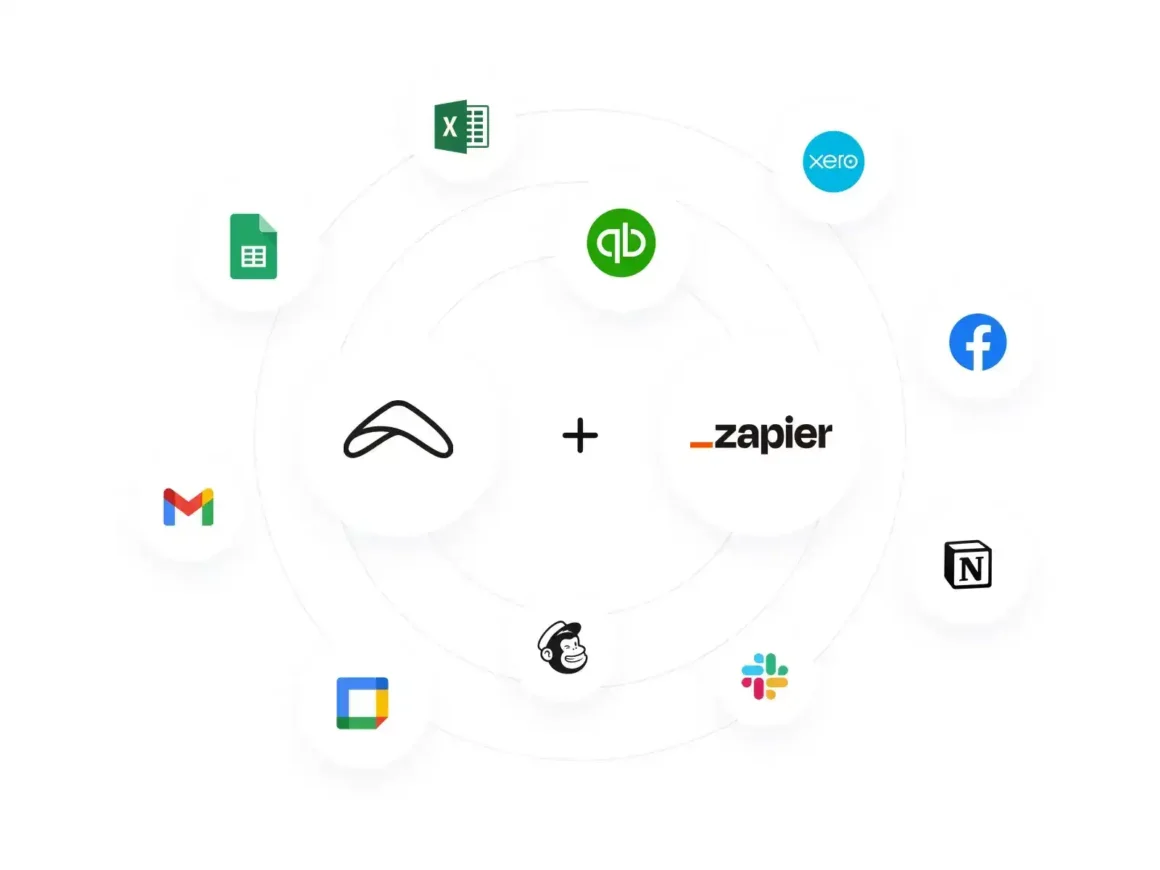
If your CRM doesn’t “talk” to the rest of your stack, you end up doing the same annoying copy-paste work all week: leads from forms into a spreadsheet, notes from sales calls into the CRM, deal updates into Slack… you get it.
That’s why Zapier matters. A CRM that integrates well with Zapier can turn your messy middle (lead capture → follow-up → handoff → reporting) into something that mostly runs itself, without you begging engineering for help.
Here are the best CRM tools that integrate with Zapier, what they’re genuinely good at, what they’re not, and how to pick the right one for your team size and workflow.
What “Zapier Integration” Actually Means For A CRM
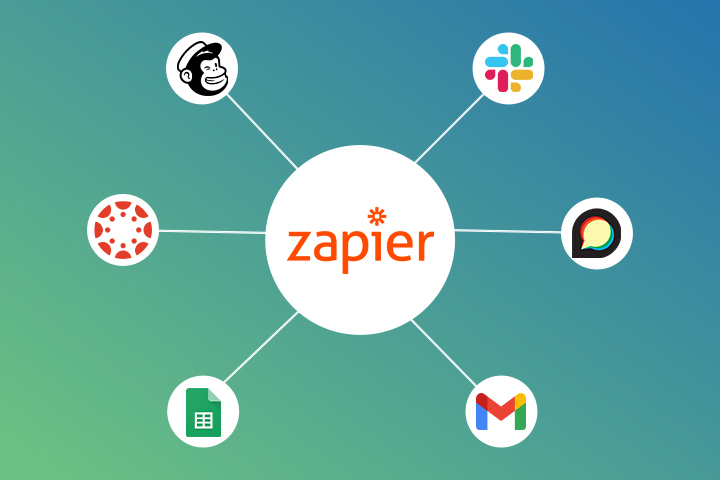
A “Zapier integration” isn’t just a checkbox. What you’re really buying is reliable automation plumbing: triggers (something happens in your CRM) and actions (Zapier does something elsewhere, or vice versa).
In a practical CRM workflow, that usually means:
- Leads move from forms/ads/chat into your CRM with the right fields mapped.
- Deal stages trigger notifications, tasks, or nurture sequences.
- Reporting gets cleaner because activities and lifecycle changes get logged consistently.
But not all Zapier connections are equal, some CRMs expose lots of triggers/actions, others feel like you’re duct-taping two systems together.
Native Zapier App Vs. Webhooks Vs. API Connectors
Here’s the short version:
- Native Zapier app (best for most teams): The CRM has a dedicated Zapier app with supported triggers/actions (e.g., “New Deal,” “Updated Contact,” “Create Activity”). This is usually the easiest to set up and the least brittle over time.
- Webhooks (best for near-real-time events): Webhooks can push events instantly when something changes. Great when timing matters (like routing inbound leads to the right rep now), but setup can be a little more technical.
- API connectors (flexible, but can get fiddly): Zapier can connect via API-style steps (often through custom requests or advanced actions). This is powerful, but you’ll spend more time mapping fields and troubleshooting odd edge cases.
A subtle trade-off people don’t notice until later: the more “custom” your Zap is (webhooks/API), the more likely it breaks when you change fields, pipelines, or permissions.
Common CRM Automations Worth Setting Up First
If you’re starting from zero, don’t build 30 Zaps. Build three that remove daily friction:
- Lead capture → CRM contact + deal (from Typeform, Webflow, Facebook Lead Ads, Calendly, etc.)
- Deal stage change → Slack alert + task (so handoffs don’t disappear into the void)
- Meeting booked → create/update contact + log activity (so your CRM isn’t “technically accurate” but practically useless)
Then add the boring-but-important one: duplicate prevention (more on that later). Duplicates are the silent killer of “automation ROI.”
How We Evaluated These Zapier-Connected CRMs
This list isn’t “who has the most features.” It’s about which CRMs actually work well with Zapier in real marketing + sales workflows, where people change processes, add tools, and occasionally forget to document things.
Save hours of research by using our Best Marketing Automation Tools hub to compare features and pricing instantly.
Must-Have Criteria: Contacts, Deals, Activities, And Reporting
For each CRM, we looked for Zapier support that covers the basics you’ll automate 90% of the time:
- Contacts/Leads: create, update, find (and ideally search by email)
- Deals/Opportunities: create and update, move stages, read pipeline data
- Activities: log calls/meetings/tasks so reporting isn’t made-up
- Reporting compatibility: not “Zapier makes reports,” but whether your automation choices keep fields/stages consistent enough to report on later
If a CRM’s Zapier app only lets you “create a contact” and not much else, you’ll outgrow it fast.
Real-World Dealbreakers: Limits, Field Mapping, And Data Hygiene
Zapier doesn’t magically remove CRM constraints. Three things tend to bite teams:
- Task volume + throttling: High lead volume can mean delayed Zaps or higher Zapier plan costs. (That cost creep is real.)
- Field mapping friction: If your CRM uses custom objects/fields heavily, mapping can turn into a finicky game of “why is this blank?”
- Data hygiene: If you can’t reliably find/update existing records, you’ll create duplicates, then automations amplify the mess.
If you want a deeper framework for choosing a CRM beyond Zapier compatibility, this CRM selection guide for growth teams is a solid next read, but we’ll keep this article focused on Zapier-fit.
The Best CRM Tools That Integrate With Zapier
Below are the tools that consistently show up as strong Zapier-connected CRMs, either because their native Zapier apps are mature, or because their workflows map cleanly to automation.
HubSpot CRM: Best For All-In-One Marketing + Sales Basics
Why it’s worth considering: HubSpot is the “easy button” if you want one system for CRM + marketing automation basics. Its Zapier integration is typically straightforward for contact creation, deal updates, and notifications.
Where it shines in a Zapier workflow:
You can route leads from almost anywhere into HubSpot, then trigger simple follow-ups (tasks, Slack alerts, list adds) without reinventing your process.
Watch-outs: HubSpot can get expensive as you scale into paid tiers, and teams sometimes assume they need to automate everything because the platform makes it feel possible. You don’t.
Pipedrive: Best For Simple, Visual Sales Pipelines
Why it’s worth considering: Pipedrive is great if your core need is a clean pipeline that reps actually use. Zapier helps fill the gaps: lead capture, alerts, spreadsheets, lightweight enrichment.
Pricing context: Paid plans often start around $12+/user/month (varies by tier and billing).
Watch-outs: Reporting and marketing features aren’t the point here. If your CRM needs to double as a marketing database, you may end up layering too many tools.
Zoho CRM: Best For Budget-Conscious Teams Needing Depth
Why it’s worth considering: Zoho tends to over-deliver on features for the price. If you need customization, fields, workflows, and a broader suite ecosystem, it’s compelling.
Where Zapier fits: Zapier helps connect Zoho CRM to the long tail of apps your team already uses (especially when you’re mixing tools across departments).
Watch-outs: The interface and configuration can feel like “you can do anything… if you have time.” Plan for setup effort.
Freshsales: Best For SMB Sales Teams Wanting Built-In Calling And Email
Why it’s worth considering: Freshsales is strong for SMB sales teams that want calling/email features closer to the CRM, then use Zapier for lead sources, notifications, and logging.
Watch-outs: If your workflow is heavily marketing-led (lists, segments, lifecycle stages tied to content and campaigns), you’ll want to sanity-check the marketing fit before committing.
Copper: Best For Google Workspace-Centric Teams
Why it’s worth considering: Copper is popular when your team lives in Gmail and Google Calendar and wants the CRM to feel like a natural extension of that.
Where Zapier helps: Connecting your Google-first world to everything else, project tools, forms, Slack, invoicing, without a heavy RevOps build.
Watch-outs: If you’re not all-in on Google Workspace, some of the “magic” wears off.
Salesforce Sales Cloud: Best For Complex, Enterprise-Grade Workflows
Why it’s worth considering: Salesforce is the heavyweight when you’ve got complex processes, multiple teams, and a real need for governance.
Where Zapier fits (and where it doesn’t): Zapier can be useful for quick connections and edge-case apps. But many Salesforce orgs eventually rely more on native integrations or platform tooling once things get serious.
Watch-outs: Salesforce isn’t hard because it’s “complicated.” It’s hard because it forces decisions: objects, permissions, lifecycle definitions, ownership rules. If you don’t have clarity, automation just makes the confusion faster.
Quick Comparison: Which CRM Fits Which Team
Here’s a quick way to narrow your shortlist without overthinking it.
Team type Best fit CRMs Why it tends to work Solopreneurs / consultants HubSpot, Pipedrive Fast setup, simple automations, low ops overhead Growing SMB sales teams Pipedrive, Freshsales Pipeline + rep workflow focus, good “do the basics well” feel Marketing-led growth teams HubSpot, Zoho Stronger contact database + lifecycle thinking Complex RevOps / multi-team Salesforce, Zoho Customization, governance, and process depth
The table is the shortcut. The nuance is what your team actually does day-to-day.
Best For Solopreneurs And Consultants
If you’re wearing five hats, you want the CRM that gives you momentum. HubSpot is usually the cleanest start if you’re doing any marketing workflows. Pipedrive is great if your world is mostly deals, follow-ups, and staying on top of a pipeline.
Best For Growing SMB Sales Teams
Pipedrive and Freshsales are often the easiest to roll out to a team of reps without it turning into a six-week internal project. You’ll use Zapier for lead routing, Slack alerts, and keeping admin work from eating selling time.
Best For Marketing-Led Growth Teams
HubSpot and Zoho make more sense when your “lead” is not just a name, it’s a lifecycle stage with attribution, segments, and handoffs. If you’re a startup sorting this out while moving fast, you might also want to scan this roundup of CRMs that actually work for startups to pressure-test your choice.
Best For Complex RevOps And Multi-Team Processes
If multiple teams touch the same customer record (sales, success, ops, partners), you’ll care more about permissions, data models, and process enforcement. That’s where Salesforce (and sometimes Zoho) tends to win, even if it costs you more time upfront.
Implementation Tips: Avoiding Common Zapier + CRM Mistakes
Zapier can make your CRM feel smarter overnight… or quietly create a mess you only discover when quarterly reporting looks “off.” A few practical tips save a lot of cleanup.
Preventing Duplicates And Keeping Lifecycle Stages Clean
Do this before you build fancy multi-step Zaps:
- Always “Find or Create” when you can, using email as the unique key.
- Standardize lifecycle stages (Lead, MQL, SQL, Opportunity, Customer, whatever you use) and decide which system is the “source of truth.”
- Be careful with two-way syncs. They sound great until your CRM and email tool start overwriting fields like toddlers fighting over a toy.
If duplicates are already a problem, fix that first. Otherwise every automation you add just manufactures more bad data.
Choosing Triggers And Actions That Won’t Break Later
A Zap that works today can break the moment you:
- rename a pipeline stage
- delete a custom field
- change a form
- adjust permissions for a role
Two habits help:
- Trigger on stable events (e.g., “New Deal,” not “Deal updated” with a bunch of fragile filters).
- Keep a simple field map doc (even a one-page note). It’s boring, but when something fails three months later, you’ll be glad you did.
Security, Permissions, And Compliance Basics
Zapier sits between systems, so treat it like part of your data stack:
- Use role-based access in your CRM so Zaps can only touch what they need.
- Avoid piping sensitive fields (like payment info) through Zaps unless you’ve explicitly validated the workflow.
- If you operate under GDPR/CCPA expectations, make sure automations respect consent fields and deletion requests.
One minor frustration: troubleshooting often looks like “it worked yesterday.” It’s usually permissions or a field change, start there before you blame Zapier.
Conclusion
If Zapier is the glue in your stack, the “best” CRM is the one that gives you dependable triggers/actions for your real workflow, not the one with the longest feature list.
Pick HubSpot if you want a smoother all-in-one path, Pipedrive if your pipeline is the product, Zoho if you need depth without enterprise pricing, Freshsales if calling/email is central, Copper if Google Workspace is home base, and Salesforce if you’re building serious multi-team process.
And once you choose, keep your first automations simple: lead capture, deal stage alerts, activity logging, and duplicate prevention. That’s where the payoff shows up fast, and where most teams quietly win (or lose) time every week.
Key Takeaways
- The best CRM tools that integrate with Zapier are the ones with dependable triggers and actions for contacts, deals, activities, and clean reporting—not just a “Zapier integration” checkbox.
- Start with three high-impact Zapier automations—lead capture to CRM, deal stage change alerts, and meeting booked activity logging—then add duplicate prevention to protect data quality.
- Choose a native Zapier app when possible for the most stable setup, and use webhooks or API steps only when you truly need real-time speed or custom flexibility.
- Match the CRM to your workflow: HubSpot for all-in-one marketing + sales basics, Pipedrive for simple visual pipelines, Zoho for budget-friendly depth, Freshsales for built-in calling/email, Copper for Google Workspace teams, and Salesforce for complex enterprise processes.
- Prevent automation chaos by using “Find or Create” with email as the unique key, standardizing lifecycle stages with a clear source of truth, and avoiding fragile two-way syncs that overwrite fields.
- Reduce broken Zaps by triggering on stable events, keeping a simple field-mapping doc, and locking down permissions so Zapier only accesses what it needs (especially for GDPR/CCPA compliance).
Integrating your CRM with automation tools can dramatically improve lead management, customer follow‑ups, and data synchronization across your marketing stack. While Zapier remains a popular choice for connecting apps and triggering workflows, platforms like n8n and Pabbly Connect offer powerful alternatives that may deliver more advanced customization or better pricing for certain teams. Learning about CRM tools, n8n & Pabbly Connect can help you choose the right combination of CRM and automation tools to streamline your processes, reduce manual work, and ensure your systems work together seamlessly.