





If you’re comparing ActiveCampaign vs Mailchimp, you probably don’t need another feature dump. You need to know which one actually fits how you work, what you’ll pay once your list grows, and whether the extra automation power is genuinely useful or just expensive clutter.
Here’s the short version: Mailchimp is easier to start with and still makes sense for simple newsletters, basic automations, and smaller teams that want a low-friction setup. ActiveCampaign is the stronger platform if your email program is tied to sales, lifecycle marketing, ecommerce flows, or multi-step automation that goes beyond “send welcome email, then wait three days.”
For most beginners, Mailchimp is the easier buy. For teams that care about segmentation, CRM-linked automation, and scaling without quickly outgrowing the platform, ActiveCampaign usually gives you more room to work.
How ActiveCampaign And Mailchimp Compare At A Glance
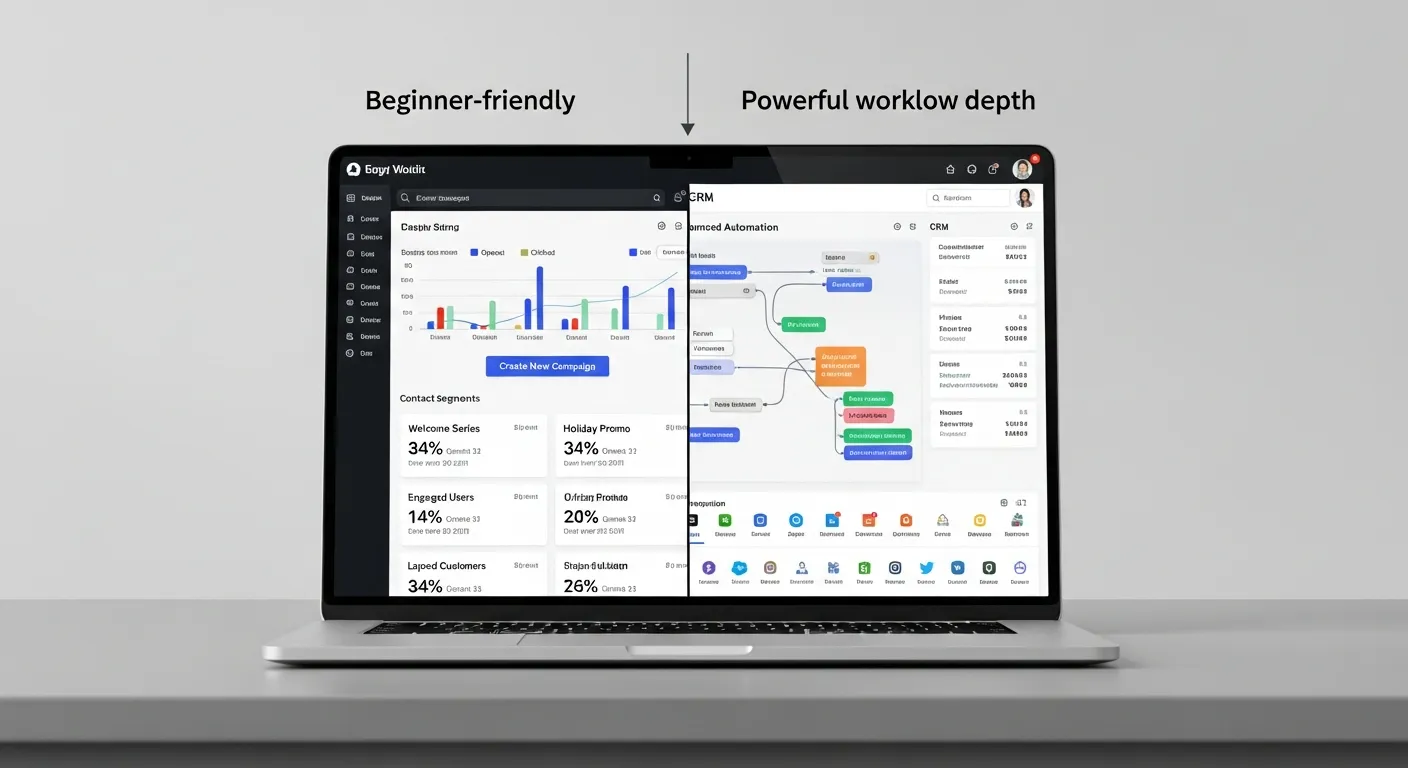
If you want the fast verdict first, this is it: Mailchimp wins on simplicity and entry-level value, while ActiveCampaign wins on automation depth, integrations, and flexibility.
Aspect Mailchimp ActiveCampaign Winner Automation Basic multi-step journeys, solid for common use cases Advanced workflows, branching logic, CRM actions, AI support ActiveCampaign Pricing Free tier available: lower starting cost for small lists No permanent free plan: stronger value once you need advanced workflows Mailchimp for basics Ease of use Cleaner and more beginner-friendly More powerful, but busier and less intuitive at first Mailchimp Deliverability Strong Strong Tie Integrations 335+ integrations 940+ integrations ActiveCampaign
A few honest pros and cons upfront:
ActiveCampaign pros: deeper automation, better CRM connection, richer segmentation, stronger ecommerce and lifecycle marketing support.
ActiveCampaign cons: steeper learning curve, no real free entry point, setup can feel like work before it feels helpful.
Mailchimp pros: easier campaign building, free plan, quick to launch, less intimidating for solo marketers and small teams.
Mailchimp cons: automation can feel shallow as your needs mature, advanced segmentation is more limited, and pricing gets less charming as contacts pile up.
If you already know you’ll need more than basic newsletters, it’s worth also reviewing broader Mailchimp replacement options for growing teams because a lot of companies hit that ceiling sooner than expected.
Core Differences In Email Marketing And Automation

The biggest gap in ActiveCampaign vs Mailchimp isn’t email design. It’s what happens after someone opens, clicks, buys, ignores, returns, or drops out.
Mailchimp is built to help you send campaigns and run straightforward customer journeys without much setup pain. ActiveCampaign is built for marketers who want email tied to behavior, lead status, sales activity, and deeper lifecycle logic.
Email Builder And Campaign Creation
Both tools give you drag-and-drop email builders, templates, and AI assistance. For day-to-day newsletter work, Mailchimp feels lighter. You can move fast, the interface is cleaner, and it’s easier to train a junior marketer or founder who just wants to send something that looks decent.
ActiveCampaign’s builder is capable, but it’s not the reason most teams choose it. The appeal is that email creation sits inside a more advanced automation system. Its AI features go further too, helping with full email generation rather than just polishing subject lines or body copy.
If your team mostly sends promos, updates, and occasional nurture sequences, Mailchimp’s campaign creation experience will probably feel better. If every campaign is part of a bigger lifecycle path, ActiveCampaign starts to make more sense.
For perspective on how these choices affect broader funnel work, blogs like HubSpot’s marketing coverage regularly show how email increasingly sits inside larger CRM and lead-gen workflows rather than acting as a standalone channel.
Automation Depth And Workflow Flexibility
This is where ActiveCampaign clearly pulls ahead.
Mailchimp supports basic multi-step automations and common templates, and for some businesses that’s enough. Welcome series, abandoned cart reminders, simple re-engagement flows, fine. But once you want branching logic, sales handoff steps, lead scoring, or automation that responds differently based on intent signals, Mailchimp starts feeling narrow.
ActiveCampaign gives you more triggers, more conditions, and more room to build real customer journeys. You can connect automation to CRM actions, use predictive sending, score leads, and create workflows that don’t collapse the moment your sales process gets slightly messy. That matters if your funnel includes demos, consultations, repeat purchases, or longer nurture cycles.
There’s a trade-off, though. More flexibility means more decisions. A lot more. And yes, it can be clunky at first. It’s the kind of platform where experienced operators feel powerful and newer users occasionally mutter at the screen.
If your shortlist includes more automation-heavy platforms, our comparison of ActiveCampaign and HubSpot for automation-focused teams is a useful next read.
Audience Segmentation And Personalization
Segmentation is another meaningful difference.
Mailchimp covers the basics well enough for many small businesses. You can build audiences around engagement, purchase behavior, and some ecommerce signals. That’s often enough for a local business, creator brand, or simple online store.
ActiveCampaign is better when segmentation becomes part of strategy rather than just list hygiene. You get more nuanced ways to combine behavior, campaign activity, deal stage, tags, and predictive data. That lets you send messages based on where someone actually is in the funnel, not just whether they joined a list.
This matters because personalization isn’t just adding a first name token. It’s deciding who should get what, when, and why. Publications like Search Engine Journal have covered the broader shift toward data-informed lifecycle marketing, and ActiveCampaign is much more aligned with that reality than Mailchimp.
If you’re mostly segmenting by broad list attributes, Mailchimp is fine. If you want to orchestrate journeys around intent and behavior, ActiveCampaign is in another tier.
Pricing, Plans, And Overall Value

Pricing is where this decision gets a little slippery, because the cheapest option at 500 contacts doesn’t always stay cheap once your list, team, and automation needs grow.
Tool Starting price Free plan Best value for Mailchimp From about $13/month for entry paid plans Yes Beginners, simple newsletters, low-volume senders ActiveCampaign From about $15–$19/month depending on plan and billing No Businesses that need automation, CRM, and deeper lifecycle marketing
Mailchimp’s free tier is still one of its biggest advantages. If you’re validating an idea, running a tiny list, or just don’t want software overhead yet, it’s a safe way to get started. The problem is that Mailchimp can become less attractive once you need more advanced segmentation, more sends, or better automation. At that point, you may be paying for convenience more than capability.
ActiveCampaign costs more upfront in practical terms because there’s no meaningful long-term free option. But the value is often better for teams that would otherwise need a separate CRM, more complex automation tooling, or workarounds to connect email with sales and customer data.
So who gets the better deal?
- Mailchimp if your needs are basic and budget is tight.
- ActiveCampaign if better automation will actually save time or increase conversion rates.
That “if” matters. Plenty of businesses buy advanced tools and use 15% of them. If that sounds uncomfortably familiar, Mailchimp may honestly be the smarter spend.
And if you’re comparing cost-to-capability against similar tools, this roundup of Mailchimp alternatives built for smarter automation gives helpful pricing context beyond vendor landing pages.
Ease Of Use, Setup, And Day-To-Day Management
Mailchimp is easier to live with on day one. That’s the cleanest way to put it.
The interface is simpler, campaign setup is more direct, and the platform does a better job of not overwhelming you with decisions too early. If you’re a founder handling email between ten other jobs, or a small team without a dedicated ops person, that matters a lot.
ActiveCampaign is more demanding. Setup takes longer, the navigation can feel busier, and getting the most from the platform usually requires more planning. You don’t just “send emails” in ActiveCampaign: you design systems. That’s great when you need systems. Less great when you simply want Tuesday’s newsletter out before lunch.
Day to day, the difference comes down to complexity tolerance:
- Mailchimp is better for faster execution with less training.
- ActiveCampaign is better for more control once your team learns it.
This is also where team size matters. A solo consultant or very small business may find ActiveCampaign overbuilt. A lean growth team with clear lifecycle goals may see that same complexity as a worthwhile investment.
If your email program sits close to ecommerce retention, comparing ActiveCampaign vs Klaviyo for retention-heavy use cases can help frame whether you need simple campaign management or a more advanced customer journey tool.
One subtle frustration worth mentioning: both tools are easy enough to demo, but much harder to judge accurately in a 20-minute trial. The real test is whether your weekly workflow feels smoother after setup, not whether the template gallery looked nice.
Integrations, Reporting, And Ecommerce Support
ActiveCampaign has the stronger ecosystem here. With far more integrations available, it’s simply easier to plug into a modern stack that includes CRM, ecommerce, forms, lead capture tools, webinar platforms, and sales systems.
Mailchimp covers the common connections most small businesses need, and for many users that’s enough. But if your workflow depends on syncing behavior across tools, say, ad platforms, your CRM, checkout data, and sales follow-up, ActiveCampaign is better suited to that kind of operational sprawl.
Reporting follows a similar pattern. Mailchimp gives you the essentials: opens, clicks, engagement trends, campaign-level performance, and useful ecommerce metrics for straightforward stores. ActiveCampaign goes deeper, especially when reporting is tied back to automations, deals, or customer behavior over time.
For ecommerce, ActiveCampaign is usually the more serious option if retention marketing is central to growth. Its automation and segmentation support post-purchase flows, win-back sequences, and behavior-based campaigns with more flexibility. Mailchimp can absolutely support ecommerce, but it feels better for lighter promotional calendars than for highly orchestrated retention systems.
That aligns with a broader marketing trend covered by teams like Ahrefs‘ marketing blog, where channel performance increasingly depends on connected data rather than isolated campaign metrics.
If you just need campaign reporting and a few key app connections, Mailchimp will do the job. If your stack is getting crowded and your customer journeys are more than linear, ActiveCampaign holds up better.
Who Should Choose ActiveCampaign
Choose ActiveCampaign if your email marketing is becoming a real system, not just a sending tool.
It’s a strong fit for:
- Growing businesses that need automation tied to lead stages or customer behavior
- Ecommerce brands running segmented lifecycle campaigns
- Agencies managing more complex client journeys
- B2B teams that want email and CRM activity connected
- Marketers who know they’ll outgrow basic workflows quickly
It’s especially useful when you care about workflow depth: lead scoring, conditional paths, sales handoffs, predictive sending, and more precise segmentation.
Who it’s not for? Usually beginners, very small lists, or teams that won’t invest time in setup. If you’re only sending newsletters and occasional promos, ActiveCampaign can feel like buying a commercial espresso machine when instant coffee would’ve been fine. Nice machine. Wrong kitchen.
So, is it worth it? Yes, if complexity is part of your reality and not just part of your aspirations.
Who Should Choose Mailchimp
Choose Mailchimp if you want to get up and running quickly and your email needs are still relatively straightforward.
It’s a good fit for:
- Solopreneurs and founders who need simple campaign tools
- Small businesses with limited budgets
- Teams new to email marketing automation
- Brands sending newsletters, announcements, and basic nurture flows
- Users who value a free plan and a gentler learning curve
Mailchimp is also a reasonable choice if design simplicity matters more than workflow sophistication. You can move fast, train people quickly, and avoid a lot of setup drag.
Who should avoid it? Teams with advanced segmentation needs, complex sales processes, or fast-growing lifecycle programs. Those users often start happy in Mailchimp, then hit limitations at the exact moment they want to get more sophisticated. That’s a frustrating time to migrate, especially if your list hygiene is already a mess.
Mailchimp is worth considering if ease of use is your top priority. Just be honest about whether “simple now” might become “restricted later.”
Conclusion
If you want the clearest answer in this ActiveCampaign vs Mailchimp comparison, it’s this: choose Mailchimp for simplicity, lower-friction setup, and basic email marketing: choose ActiveCampaign for serious automation, richer segmentation, and a platform you’re less likely to outgrow.
Neither choice is universally better. It depends on how complex your marketing really is today, and how complex it’s likely to become over the next year.
If your team just needs to send strong campaigns without much hassle, Mailchimp still earns its place. If you’re building lifecycle marketing that connects email, CRM, ecommerce, and sales activity, ActiveCampaign is the more capable tool.
The right pick isn’t the one with the longest feature list. It’s the one your team will actually use well.